How Freelancers Manage Their Bank Accounts
Most successful freelancers separate business and personal accounts, automate tax savings, and pay themselves a fixed salary. Here are the practical systems that actually work.
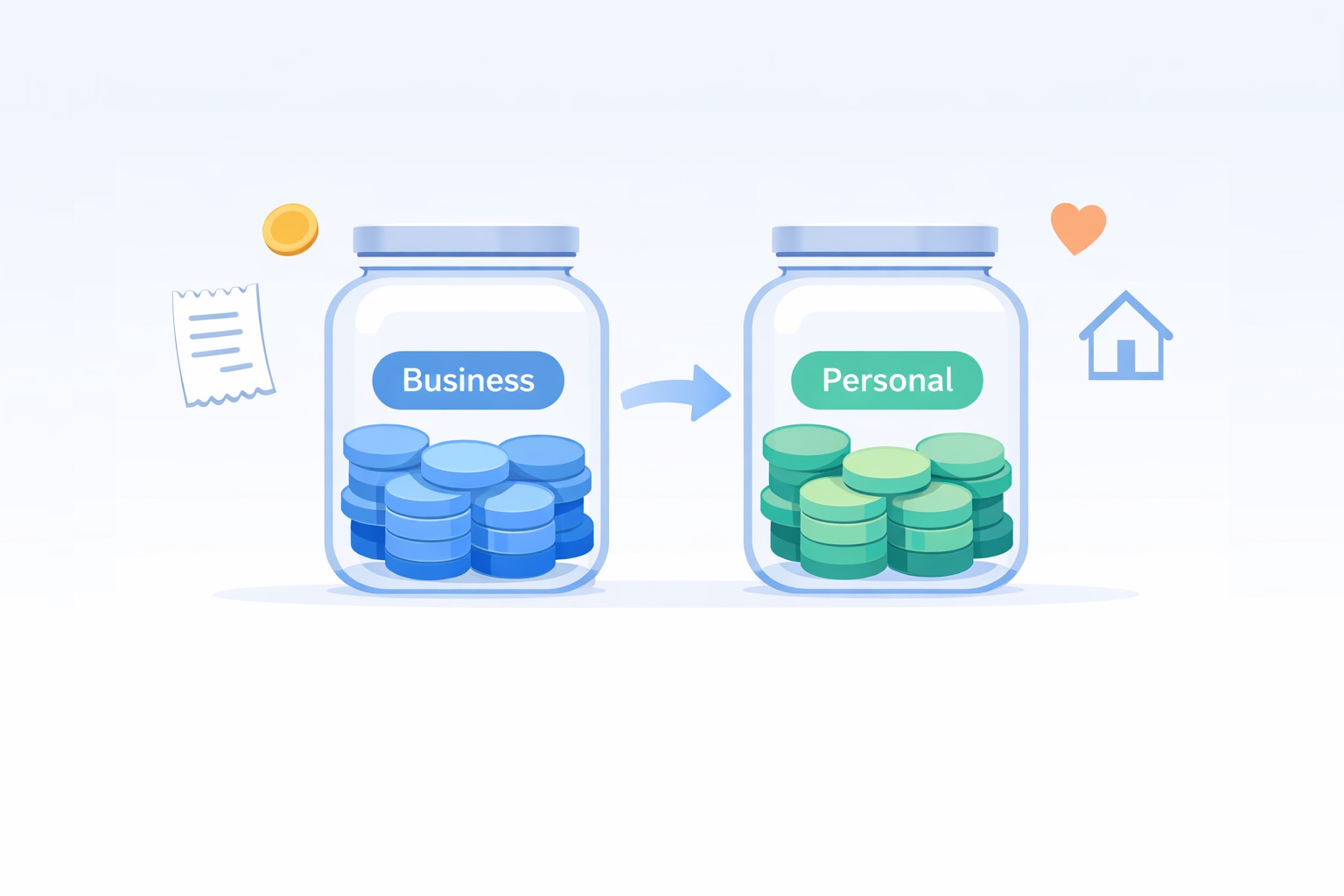
TL;DR: Most successful freelancers manage their finances by separating business and personal bank accounts, automating tax savings, and paying themselves a fixed monthly "salary." Whether you use a simple two-account setup or a more advanced multi-account system, the key is keeping business money organized and your personal spending predictable.
Why Your Banking Setup Matters as a Freelancer
When you're a freelancer, your bank account is more than just a place to park money. It's the backbone of your entire financial system. Unlike a traditional job where taxes are withheld and a paycheck shows up like clockwork, you're responsible for everything: tracking income, covering expenses, saving for taxes, and paying yourself.
Without a clear system, things get messy fast. Freelance income is irregular, tax obligations sneak up on you, and it becomes almost impossible to know how much you can actually spend in a given month. The good news? Setting up the right banking structure doesn't have to be complicated.
The Most Common Account Setups Freelancers Use
There's no single "right" way to organize your bank accounts. The best system depends on your income level, how many clients you juggle, and how hands-on you want to be. Here are the most popular approaches.
The Simple Two-Account Split
This is the most straightforward method, and honestly, it's all many freelancers ever need. You maintain one business account and one personal account.
Here's how it works in practice:
- Business account handles all client payments coming in, every business expense (software, hardware, travel, subscriptions), and tax savings
- Personal account receives a fixed monthly transfer from the business account, like a regular salary
The beauty of this setup is its simplicity. All your business activity lives in one place. If you ever get audited, everything relevant, your income, expenses, and tax payments, is already consolidated in a single account. No hunting through multiple statements.
You pay yourself a set amount each month, regardless of whether you earned $3,000 or $10,000 that month. The rest stays in the business account and builds up as a buffer. Every six months or so, you check the balance. If there's more than you'd need to cover six months of expenses with zero income, you move the surplus into investments like index funds or ETFs.
On the personal side, keeping roughly three months of your "salary" as a buffer gives you peace of mind without over-complicating things.
This approach works especially well for freelancers who want clean financial records without maintaining a complex system. Start simple, and only add complexity when you actually need it.
The Three-Account System
This takes the two-account method and adds a dedicated tax savings account. The structure looks like this:
- Business checking for income and expenses
- Tax vault where a percentage of every payment automatically transfers
- Personal account for your salary
The advantage here is that tax money is physically separated from your operating funds, so you're never tempted to spend it. Many freelancers set up an automatic rule to transfer 25-30% of each deposit into the tax account immediately.
The Profit First Method (Four to Five Accounts)
Inspired by the book Profit First by Mike Michalowicz, this system uses multiple accounts to allocate money the moment it arrives:
- Revenue account (income lands here first)
- Profit account (a small percentage goes here before anything else)
- Tax account
- Owner's pay
- Operating expenses
This is more involved but forces you to prioritize profit and savings over spending. It works well for freelancers earning higher incomes who want more financial discipline.
The Single Account + Tracking Approach
Some freelancers keep everything in one account and rely on software or spreadsheets to categorize transactions. This is the lowest-effort approach, but it comes with risks. It's harder to track business expenses at tax time, and mixing personal and business spending can create problems if you're ever audited.
If you're just starting out and earning small amounts, this might be fine temporarily. But most accountants and financial advisors recommend separating business and personal finances as soon as possible.
How to Set Up Your System Step by Step
Pick the Right Bank Account
Look for a business account with no monthly maintenance fees, no minimum balance requirements, free transfers between linked accounts, and mobile deposit. Integration with accounting tools like QuickBooks, Xero, or Wave is a big plus. If you're building out your full freelancer tool stack, your bank should fit neatly into that ecosystem.
If you earn from multiple platforms like Upwork, Fiverr, PayPal, or Stripe, make sure your bank accepts direct deposits from those services. Consolidating fragmented income into one account makes record-keeping dramatically easier.
Automate Your Tax Savings
This is the single most important automation for any freelancer. Determine your estimated tax rate (typically 25-30% for self-employed workers after deductions) and set up an automatic transfer for that percentage every time money hits your business account.
Some banks designed for freelancers offer built-in tax tools that automatically calculate and set aside estimated payments throughout the year. Whether you use a dedicated tool or a simple auto-transfer, the point is the same: never leave tax money sitting in your spending account.
Mark your quarterly tax deadlines so nothing catches you off guard: April 15, June 15, September 15, and January 15.
Pay Yourself a Consistent "Salary"
Pick a fixed amount to transfer to your personal account each month. Base this on your average monthly income minus taxes and business expenses, then be conservative. It's better to give yourself a raise later than to overspend during a slow month.
This single habit transforms how freelancing feels. Instead of the emotional rollercoaster of variable income, you get the stability of a predictable paycheck. If you're transitioning from a 9-to-5, recreating that paycheck rhythm makes the switch feel a lot less jarring.
Schedule Weekly and Monthly Reviews
Set aside 10 minutes each week to review transactions in your business account. Categorize expenses by type (software, travel, home office, client project) and flag anything unusual. This tiny habit saves hours during tax season.
Once a month, do a more thorough reconciliation. Compare your bank statement against your accounting records, verify deposits match invoices, and check that no expenses are missing. Bi-weekly or monthly reconciliation helps identify discrepancies and cash flow risks before they become real problems.
Cash flow management is one of the most underrated freelancer skills. Get your banking setup right, and every other part of your finances gets easier.
ttime
Your work tracks itself. You track the revenue.
Tools
Pomodoro TimerAmbient NoiseTime Card GeneratorMeeting Cost CalculatorProject Cost Estimate CalculatorWorking Days CalculatorFreelance Job FinderBlog
Latest ArticlesThe Freelancer's Guide to Retirement PlanningHow to Say No to Client Requests Without Burning BridgesHow to Negotiate a Rate Increase With Existing ClientsHow to Fire a Bad Client Professionally (And Walk Away Clean)Freelance Contracts 101: Clauses You Should Never Skip© 2026 ttime. All rights reserved.
Built with ♥ for freelancers, by freelancers.